Tuesday, May 24, 2016

Movie Review: 10 Cloverfield Lane

On March 11th, 2016, 10 Cloverfield Lane hits the theaters. Dan Trachtenberg directs and JJ Abrams produces this suspenseful, horror/drama, and  PG-13 film capturing the time period following an alien invasion in an apocalyptic world. The main character, Michelle, experiences this event from the inside of a bunker with a psychopath. She faces a conflict that the whole movie is predicated on. The conflict is whether to stay in the safety of the bunker with a monster or to go and face the monsters outside. I ascertain that 10 Cloverfield Lane portrays the inner conflicts of whether to get involved and face the world or to stand off to the side.
The movie starts off with Michelle driving on an abandoned street. She gets hit by a car and ends up in a the mysterious bunker of Howard, an ex-veteran, and Emmett. Right from the start, she doesn’t trust him and desires to leave the bunker. She has no idea if the outside world is safe. Towards the end of the movie, Howard kills Emmett, but luckily, Michelle manages to escape and face the dangers that await on the other side of the air locked door.
An important facet of 10 Cloverfield Lane is its ability to make the viewer feel as though he/she is actually experiencing the film, through the actors. There is a certain scene when Michelle is trying to maker her escape, that the emotions of the character leak out to the audience. She is climbing through a ventilation when all of the sudden Howard starts stabbing a knife through it, trying to make her stay. He grabs her leg after making a hole and starts pulling. The fear felt by Michelle travels to everyone experiencing the film. When I watch the film, I feel as though I am Michelle crawling through the tunnel. I scream when she screams. When she panics, I too panic and feel the stress of the situation. Mary Elizabeth Winstead plays Michelle, and John Goodman plays Howard. They are exceptional actors who convey emotions, such as fear, panic, and apprehension, which add to the overall internal friction felt by Michelle.
The choice of scenery by Benjamin Edelberg and Dave Kelsey make the film more entertaining and add anticipation. By using certain sets, they help to show how awful the bunker is. The bunker pushes Michelle to want to leave and face challenges head one. One key scene that portrays this idea is when Michelle is attempting to fix the electrical system. She climbs to the top of the bunker through the vents. When she reaches the electrical room, she spies some scratched out writing on a window. The writing has dried out blood on it and reads “help.” This alerts Michelle that Howard is a dangerous person and that he has killed someone before. The scratched out words represent the genius of Edelberg and Kesley. They are able to create a certain fearful feeling by using the scenery to their advantage.
In addition to the great scenery and actors, 10 Cloverfield Lane develops the backstories of the actors, which helps the viewers and myself to relate to them even further. The film takes time to discuss Emmett and Michelle’s old lives to make them more relatable. Aside from their emotional displays, their storylines make their characters. Emmett is too afraid to put himself out there. He tells Michelle that he received a scholarship for college, but never took the bus to get there. In the beginning of the movie, Michelle is talking with her mean boyfriend on the phone, and one can assume that her relationship is detrimental to her well being. Both Michelle and Emmett suffer with the lack of ability to change their lives. Today, many people struggle to find their way in life. They enjoy sitting back and watching, but never actually getting involved. However, by the end of the movie, Michelle decides to fight Aliens, and Emmett tries to defend Michelle from Howard. They both experience growth from their original backstories. The backstories create a relationship with the audience.

Whenever I watch 10 Cloverfield Lane I scream in utter fear, but that doesn’t mean it isn’t a fantastic movie. Abrams and Trachtenberg out do themselves with this masterpiece. The film seems almost real when watching it. The characters, actors, and scenery help to make a perfect mix of excellence. My sweaty palms and rapid heartbeat illustrate how real the movie feels. It covers many emotions and focuses on the theme of going outside one’s boundaries. I would recommend this movie to anyone because its ideas are deep and thought out, yet at the same time entertaining and encapsulating.

Friday, May 20, 2016

Book Review: The Things They Carried

From the year 1955 to 1975, the American Army fought in the Vietnam War. Tim O’Brien highlights his experience and the experiences of others in The Things They Carried. This first person narrative goes through events that O'Brien and his unit lived through, and he then discusses later in the book what emotions and feelings they had after the war. His purpose is to depict how bloody can be war, but more importantly, he is trying to show what men have to live with after the war is long gone. I believe that O’Brien’s accounts of the war give a clear portrayal of what the soldiers had to deal with before, during, and after their stay in Vietnam.
The Things They Carried takes us through the life of O’Brien and the rest of his unit. It depicts the tough, individual journey that Tim went through after receiving his draft letter and also delves into detailed stories and memories. The social problems that Commander Jim Cross faced are brought into the light, in regards to his awkward relationship with a woman named Martha. The book examines the lives of Ted Lavender, Lee Skunk, Kiowa, Norman Bowker, Rat Kiley, and Dave Jensen as well. These men died in the war or faced major psychological problems after. By going into their stories, O’Brien gives a larger picture as to what happened during his service.
One key aspect of the book that makes it enjoyable, is its ability to depict the human mind. When I am reading through the book, I feel as though my brain is in sync with O’Brien’s. His chapters don’t necessarily follow any particular chronological order. He slips from time to time, not sticking to one story or experience for too long. At one point, he discusses the thoughts that went through his head after killing a man, and the next chapter he discusses the PTSD another comrade of his experienced after coming home to the states. Just like a mind jumps from thought to thought, so does his style of writing. When a soldier returns home, like Norman Bowker, his mind is scrambled. Norman couldn’t save his friend Kiowa in a awful storm. He lives with the guilt, and O’Brien suffers the same feelings as well. His thinking influences his form and helps the reader understand the war.
The characters in the story are also synonymous with a classic grade in school. There are the jokesters, the serious, progressive students, the addicts, the wallflowers, the timid, and the brave. Lee Skunk and Dave Jensen are the “class clowns.” Their joking could sometimes be dangerous, but they add to the unit or class environment. Kiowa is a more determined soldier, who also acts to help his unit. It seems that Tim O’Brien is more of a wallflower. He observes everything that occurs around him. Rat Kiley is the kid in the class who can’t stop lying and telling made up stories. He wants attention and will tell the craziest stories to get. These characters resound with my school, and it made reading the book that much more enjoyable.
Another important piece of the The Things They Carried is the context of where it takes place. Trying to have high school students wrap their heads around war can be impossible. For a student to truly appreciate and understand the sacrifices and pain of war, they have to actually experience it. Tim O’Brien does a beautiful job of conveying the hardships of war, and it helps me understand how bloody war can be. When he describes burning down a village, torturing a water buffalo, or even killing another man, war can be conceptualized. His imagery and description are precise and add to the realness of his story.
After reading The Things They Carried, I gained a better appreciation for the Vietnam War. I would recommend this book to anyone because everyone will find their own way to relate to what they are reading. Whether it be the structure of chapters or the characters themselves, they can easily be compared to a high school student’s life. It was a great read that had me on the edge of my seat, and I believe it will do the same to anyone who picks it up. Tim O'Brien's masterpiece is definitely worthwhile.

Wednesday, March 16, 2016

Ana Juan “New Yorker Cover”

Ana Juan, in her illustration of a “New Yorker Cover” (2011) asserts that although the World Trade Center was destroyed, it will always be remembered as a part of New York City. She supports this assertion by including a watery image of the twin towers in a reflection of the New York skyline. Her goal is to show how the twin towers are still having an effect today and will always be alongside the rest of the skyscrapers. She creates a personal connection with all of the citizens of America by reminding them of 9/11.

In this illustration, the past and the present seem connected, but at the same time very different. The waterline divides the two different time periods from each other. The reflection in the water holds the past and the twin towers. Above the water is the shining city of New York, which exemplifies the present. However, Ana Juan’s goal was to show how even though there are two different time periods, they are still connected. When one looks at the reflection of New York City, they don’t simply see a bunch of glittering buildings. They also see the past and memories of a different city that once stood proud and strong. The past and present may be separate, but to fully understand what New York is all about, one needs to see the whole story. The skyline will always feel a bit empty without the towers, but the memory of the past will always remain.  


Tuesday, March 8, 2016

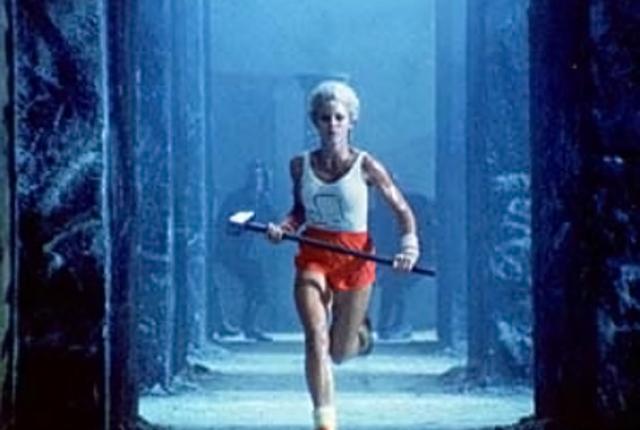
Synthesis Blog: Apple Ad '1984'

Apple seems to be a crossroad, that could either go two ways. At one hand, the U.S. Government wants the software to break the password of an iPhone to get into the assailant's iPhone in the San Bernardino case. On the other hand, Apple products promise security and privacy, which makes it appealing to customers. People would feel less inclined to purchase products if they knew their information was out in the open. I believe Apple has a right to keep their products private and have no obligation to create password-breaking software.
The 1984 ad created in preparation for the launch of the Macintosh computer defends Apple’s claim on the debate. The whole basis of a 1984 society is that there is no freedom. Privacy is taken away to ensure that “traitors” don’t prevail. Each room has a telescreen that monitors every move a person makes. Apple, in 1984, was trying to compare IBM to this idea. IBM, the "Big Blue," wants full control, while Apple is the groundbreaking savior sent to destroy a computer monopoly. It seems that once again, Apple is in the same situation because now the American Government is trying to take away freedom and privacy. 
The article “Breaking Down Apple’s iPhone fight with the U S. Government”, written in the New York Times, gives clear reasons why Apple can’t simply release the password- breaking software. This release would snowball into the government taking control of privacy. They would have the ability to use it for a number of cases, which would hurt Apple greatly. Not only that, but China would also have a lot to gain from this software. Their “officials have been pushing for greater control over the encryption and security of technology sold there,” which means that China would have even more controlling and censorship abilities in the computer world. The cons definitely outweigh the pros for a world that doesn’t want to look like 1984.
Apple was considered to be groundbreakers when they released their ad. They turned commercial viewing on the Super Bowl into a “cultural phenomenon”. However, the tides have turned because it is starting to look as if the world will eventually emulate the society of 1984. The government is trying to take control of liberties and rights that we as Americans hold dear. In the coming weeks and months, we will see which direction our world takes as we move forward.

Wednesday, March 2, 2016

David Sedaris “Go, Carolina”

David Sedaris, in his essay “ Go, Carolina” (2000), claims that he struggled in school socially and physically, due to the school system’s problems with helping kids who were gay or struggling with impairments. He supports this claim by sarcastically going over a period of four months where a speech therapist attempted to help him. His purpose is to highlight problems with education and depict how students with his disability and with other issues felt like outsiders. He creates an informal relationship with the audience by using a sarcastic tone and by speaking in first person.

  1. The speech therapy story revealed many issues with school systems and depicted what types of methods they use. The main issue I had with David’s school was their strategy for helping students with issues. They had speech therapists on a circuit, which meant there wasn’t a lot of consistency between teachers, and it also meant that teachers weren’t being interviewed. Miss Samson was a horrible individual and placed herself over David in a superior manner. The school never screened this teacher to see her methods. That showed a lack of caring on the school’s part. However, this story didn’t strike me as true because my school is very different. Since it is a private school, each teacher is interviewed and then watched throughout the semester. The school also sends out google questionnaires on teachers that are anonymous. This means that the school is getting input from the students. From where I come from, I could never see this happening in my school, and I pity David.
  2. David Sedaris does a very good job of making heavy parts in the story lighter with comedy and sarcasm. When the Miss Samson mercilessly tricked him into speaking with a lisp, he lightened the mood, by recalling how his mom called him a “sucker”. The therapist had acted with zero respect, but David made the story seem funny. Therefore, he was able to accomplish a very depressing point in his life, without mortifying the audience. He also originally referred to Miss Samson as an agent, which in his mind made going to the therapist more lively. He was able to cope with difficult points in his life with humor and a good attitude.
  3. There are a few key lines that highlight David Sedaris’ sarcastic tone. When David was complaining about Miss Samson, he said, “She was in love with the sound of her own name and seemed to view my speech impediment as a personal assault. It I wanted to spend the rest of my life as David Thedarith, then so be it. She, however, was going to be called Miss Chrissy Samson.” This line reveals how he takes his speech impediment in strides. He is able to make a joke out of a seemingly irritating situation, by referring to himself as David Thedarith. This also shows his tone as being one of positivity that overshadows serious points in his life. He again uses his speech problem in funny manner by saying how he preferred to use the word “champ” over “sucker.” David tries to give everything a humorous twist, which sums up his tone.

Sunday, February 21, 2016

Toni Morrison “The Nobel Lecture in Literature”

Toni Morrison, in her acceptance speech “The Nobel Lecture in Literature”(1993), asserts that language is a powerful entity that can be molded to be used for just and moral purposes, but at the same time it can be used for the opposite. Morrison supports this claim by telling over a fable of two children who asked a question to a wise woman. Her purpose is to show the importance of language and explain how she crafted her works by using language the right way. She addresses the members of the Swedish Academy, using an educator approach, as she accepts her Nobel Prize in Literature.

1. Toni Morrison has a very unique take on language. She believes that it can be used for good and important causes, but at the same time it can be used for violence and used to cover up “rape, torture, assassination.” Therefore, she brings up the fable of the dead bird to prove that language is “in your hands.” The children can either kill the “bird” or let it live, but it is up to them. Language is the same way, you can either help it develop and thrive or let it die and shrivel away. People have the power to create something terrible or something beautiful, which is what Morrison asserts in her speech.
2.There was an interesting relationship that developed overtime between the wise woman and the two children. At the first, the children wanted to bother the wise woman and challenge her smarts. However, the woman didn't get angry with the children, rather she expected more from them. She had expectations for them and wanted them to act with responsibility. Towards the end, the children’s perspective changed. They realized their stupidity, and they then desired experience and knowledge from the woman. They wanted her skills and understanding. The woman didn't desire anything at the end because she got what she wanted. She made the children value life and value understanding. The children changed from start to finish, while the woman received what she wanted from them. 
3. The use of the fable adds a certain edge to the story that could not have been accomplished any other way. By using the fable, she hooks the attention of the listeners. Like any good storyteller, she pulls the audience into her words with a story. Then once she has the crowd, she can then focus on her main ideas and main takeaways from her speech. The “once upon a time” instantly grabbed my attention, and I was on my toes, eagerly anticipating the next part of the fable. I think the fable fits with the speech because it allows Morrison to be creative, but at the same time informative.

Thursday, February 18, 2016

The Importance of Getting History Right


Every country or society portrays their history and world history in their own way. Some societies place in their history books garbage about their “amazing” accomplishments. They barely dwell on their downfalls. On the other hand, there is a more truthful history that focuses on both the negatives and the positives. This method also tends to push for more critical thinking. In my opinion, it is important to get history accurate, even if it doesn’t always portray your country in the most favorable light.
For the past few weeks, I have been delving into 1984, by George Orwell. He tells the story of post WWII where people are only educated on their country’s success. The main character, Winston, even has a job, which consists of changing history books to make the country, Oceania, look better. The result is that people have little ability to reason or think for themselves. They simply accept their “false” history, without any objections. They don’t question the “whys” and “hows” of history. This brings the downfall of their society. If their history books had given accurate information, then the people would have been more educated and would have had the ability to question a government on its faults.
A program that focuses on the deeper understanding of history is Facing History and Ourselves (FHAO). They pride themselves on their ability to not simply look at the outside level of past events. They go through the mindsets of past historical figures and break down events into themes and ideas. Their goal is to make sure that certain horrible occurrences from history do not happen again. Therefore, they “face history” and then move forward in a positive direction. They not only get history right, but they manage to depict it in a favorable and beneficial way. They exemplify the importance of getting history right because out of their programming come informed student leaders.
On the other hand, the school systems in Japan seem to be going in the opposite direction. Most of their history books spend little time focusing on the time periods leading to WWII and WWII itself. They spend tons of pages focusing on Japan after the war and way before the war. They simply want to instill a sense of pride in their country after their major flaws in WWII. They are embarrassed by the atomic bomb and embarrassed by their past vulnerability. Therefore, their history books mostly leave that time period out, only including a few small details about the events. This can be a very scary practice because if the students and people of Japan don’t learn from their past mistakes, then they are bound to repeat them. Japan hasn’t really learned anything from WWII because their textbooks don’t include key information.
The importance of laying out truthful history outweighs building up a country’s patriotism. The people of Japan and Oceania have a burning love for their country, but this forces them to accept their situation and accept everything that is thrown at them. They lack the ability to question and understand. This ability is evident in truthful history, which allows for reasoning and thinking. If we get history right, we are more likely to move forward in the right direction.


Wednesday, February 10, 2016

Maya Lin's Vietnam Veterans Memorial

Maya Lin, a sculptor of the Vietnam Veterans Memorial, asserts through her art that the main way to pay respect to soldiers is by picturing yourself in their shoes and understanding their sad predicament. She supports this claim by making her memorial/sculpture reflective like a mirror and having it slope downward to depict sadness. Her purpose is to make people get into the heads of the soldiers who fought in Vietnam. She builds a close relationship with the viewers by making the sculpture reflective and personal with the addition of all the names of lost veterans.
1. The Vietnam Veterans Memorial contains lists of lost soldiers and an interesting design, which adds a deeper level to what the memorial embodies. It may seem odd that Lin chose to list all 52,000 names, but I think this is what makes it so personal. People who have lost relatives now have a connection to the memorial. They now have a place to remember, grieve, and celebrate their loved ones. The names add to the sculpture, rather than detract. Also, the reflective nature of the memorial adds a deeper level of personal attachment. One can see themselves in the memorial and imagine what these soldiers had to go through. It seems that Maya Lin’s main goal was to create a sense of closeness and realness between the dead and the living.
2. This memorial sends out a very important message regarding the army and armed forces. By listing each name of every soldier, Maya Lin depicts how each life had meaning. There wasn’t a collective bunch of people that perished, but rather 52,000 individuals that lived lives outside of Vietnam. When they died, their lives were cut off, and many families felt the massive loss of one person. Maya Lin pays respect to the individual by including every name. She shows how in the American Army, they value each soldier and how important one life can be. The viewers of this memorial get the message that life has value, and that the army stands by this ideal as well.

Sunday, February 7, 2016

Living Like Weasels

Annie Dillard, in her essay “Living Like Weasels” (1974), claims that just like the weasel, we as humans should try to behave on instincts. Dillard supports this idea by first describing an anecdotal encounter with a weasel and then analyzing the weasel's traits. Her main objective is to prove that the weasel acts without regret and jumps right into situations, which is how we should act. She creates an informal relationship with the audience by speaking in first person and addressing those who like to contemplate every single move in life.


1. Each section in the essay is numbered, which creates a clear image of how the encounter with the weasel went about. The first section is merely background information, setting the tone and maybe building up suspense. The second section introduces the story of how Dillard met a weasel. The third section consists of the actual meeting and her reactions. The fourth section is her analyzation of how she and the weasel go about life. The fifth section is her regrets in life, and the final section is the conclusion. Dillard’s method has a clear structure and shows how she processed the event in a logical manner. In a sense, it fits the classical prototype of an average story. It has the rising action (background, buildup to encounter), the climax (actual encounter), and the falling action (exploring the encounter in greater depths). The numbers are perfect because they clearly mark a shift in the story.

2. The line “noticing everything, remembering nothing…” sheds light on an important life lesson that is constantly overlooked. People tend to get caught up in the constant hustle and bustle of the world. However, they get caught up on the smallest things, which sets their day into a downward spiral. Everyone has that one moment in their day, and I am no different. Last year, there was a span of almost two months where the school kitchen didn’t have Rice Krispies for breakfast. Everyday, I would leave breakfast in a funk, angry at the subpar cheerios that I had been forced to eat. If I had taken the advice of the weasel, those morning blues wouldn't have fazed me. The weasel sees everything around him, but doesn’t let it get to him. He doesn’t remember the bad or good, he just keeps moving forward to the next instinct. Pushing forward is a key lesson that the weasel embodies.  

5. Throughout this essay, Dillard puts an emphasis on the need for the “wild” in daily life. In my opinion this may seem contradictory to what most people do. People pride themselves on their rigid work schedules and habitual lifestyles. Some students even have their whole lives planned out before they even reach college. When Dillard mentions the “wild”, she focuses on the freedom and easygoing nature of the outdoors. There is no structure or way to go about life. There are simply instincts that push animals to live and thrive. The “wild” mentality is somewhat unheard of in modern-day life. Dillard’s “wild” people would simply be looked at as lazy, but in truth they are living in a more free environment. Dillard makes the outdoors seem inviting and calm because that is one place where the hardships and structure of society fall aside.


Wednesday, January 27, 2016

An Uprising from Oregon to Tennessee

Bruce Vanwyngarden, an opinion writer for the Memphis Flyer, in his article "Making Tennessee Great Again!"(Jan. 7th, 2016), claims that he will holdup the Big Hill Pond State Park in response to his disgust with the Tennessee Politicians. He supports this assertion by satirically setting up parallels between his holdup and the Oregon Militia Standoff. His main goal is to create a fictional situation of him holding up a state park in order to shed light on how absurd the Oregon Militia Standoff is. He creates an entertaining relationship with audience who are probably just as outraged and amused at his actions and the actions of the Oregon Militia.

The Oregon Militia Standoff at first comes off as amusing. Here we have a bunch of cattle ranchers holding up a bird watching house, screaming for justice and freedom. Do they actually think they can make a difference? Does anyone care that a bird watching center is being occupied? In truth, their motives are important. They are standing up for the injustice felt by the Hammond family. Two of their family members are being charged for terrorism, but in fact, they only set crops on fire to stop a massive wildfire. The US Fish and Wildlife Service and the Bureau of Land Management have been after this family for a while. On top of that, they have harmed many ranchers in the area as well. Ammon Bundy, the leader of the militia, deemed the incitement of the Hammond family as the last straw. Although his methods look radical, he is receiving attention, which is the main goal. It doesn't really matter where he occupies, as long as he is getting media coverage. The government and people need to be aware of the unfair treatment. These ranchers have lost hundreds of thousands of dollars to the FWS and BLM. They have every right to rebel, and I don't think this situation should be taken lightly. 

Monday, December 7, 2015

SRC on Resilience

Summary: In her article, "The Profound Emptiness of Resilience," Parul Sehgal ascertains that people tend to blame real social problems on lack of resilience and character. She discussed how nowadays government agencies and universities include in their mission goals the idea of resilience. However, people tend to think that college students are weak and need parents, which is pretty much saying that they lack resilience. Sehgal said that the use of guidance counselors at schools has almost doubled. Students are simply more emotional and let things get to them. However, we can't let this fact cloud our judgement regarding racial issues in school settings. Just because the students are more emotionally weak, does not mean that racial harassment isn't occurring as often. There is now a new form of resilience were these students have started to speak up against racial discrimination. They are being resilient by continually making a stand and growing as a result of their grit.

Response: Many of Parul Sehgal's points resounded with me because after all, this city of Memphis has been built on grit and grind. We strive to get better each day and go through trials and tribulations to reach success. However, Memphis still faces issues of racism as well. There is a large amount of division between different classes and races. Therefore, I think that we shouldn't look at college student's stands for racism as emotional weakness, but rather as resilience to push for a better and equal country. In Facing History and Ourselves, we strive to speak out, break down barriers, and remain resilient in these dark times. There have been countless police shootings against black civilians, which shows how out of touch two races can be. The powers of grit and grind have to be put to work to ensure an end of discrimination.

Citation:
Sehgal, Parul. "The Profound Emptiness of ‘Resilience’." The New York Times. The New York Times        Company, 1 Dec. 2015. Web. 7 Dec. 2015. <http://www.nytimes.com/2015/12/06/magazine/the-        profound-emptiness-of-resilience.html?_r=1>.

Monday, November 16, 2015

Last Lincoln Blog

Abraham Lincoln, the 16th President of the United States, in his Second Inaugural Address, claims that the South caused the war, and due to differences on both sides, the war was simply unavoidable. Lincoln supports this assertion by first summarizing the causes of the war, and then discussing his hope for reconstruction of the South. His main goal is to show the South as the producer of the war and depict how their future will look like, whether with vengeance or rebuilding. He uses a strong voice to address the whole country, but specifically calls out the South. 

Upon reading Lincoln’s speech, I found a few points that resounded with me. Lincoln points to the South as the perpetrators and calls for the blood of slavery to be redeemed. This was a strong statement, and at first glance, it seems that the South has two options: win and live or lose and die. Luckily, Lincoln doesn’t leave them out in the dry because he offers a solution to their troubles, which is “to bind up the nation’s wounds.” One of the most important traits in a leader is to fix the enemy and not neutralize them. This task is not an easy one because as we have seen in history, sometimes a nuclear bomb gets the job done. However, sometimes coming to an even ground with the enemy allows a chance to reach peace. Lincoln wants to “win the peace,” and this characteristic defines him as a good leader.

Monday, November 2, 2015

The Power of Drones

Gail Collins, an Op- Ed columnist for the New York Times, in her article “Dreading those Drones”(October 30, 2015), asserts that although drones can be used for recreational activities, they have the capability to put safety at risk. Collins supports this claim by first differentiating between toy airplanes and drones in accordance with the Federal Aviation Administration and discussing examples of drones harming safety in sports complexes, airports, and jails. Her main goal is to prove that drones need to be regulated in order to ensure security. She creates a relationship between her and anyone who might have or might want a drone by sharing the dangers of a simple flying device and urging the government to make regulations.


After reading Gail Collins’s response to drones, I discovered that although she may have made some good points, her overall logic is flawed. She claimed that drones are dangerous because they have gotten in the way of fires, have attempted to give weapons to prisoners, and have the ability to take pictures of anything from the air. Her points are valid, but she never mentioned the good that drones can do as well. They can be used to help intelligence organizations put bad people behind bars and can fight wars without having to send any troops to another country. It could help by sending medical supplies to hospitals, not just sending knives to a prison. In my opinion, the drawbacks of the drone do not outweigh the potential it has for success. Do the cons really outweigh the pros?


Link: http://www.nytimes.com/2015/10/31/opinion/dreading-those-drones.html?partner=rssnyt&emc=rss

Sunday, October 11, 2015

Lincoln Blog: Possible Uprising

     The American government and how people react to its decisions have not changed from the times of its creation. People tend to lose patience with the direction the government is taking, and lose faith in what it stands for. Lincoln in his speech discussed how overtime the lack of faith in a government can push people “who love tranquility” to “become tired of… a Government that offers no protection.” The start of this process is when laws are disregarded and people don’t have the energy to fight for justice anymore. Right now in America, the situation is at a point where people are losing hope in their government as well. There have been a few government shutdowns in the past few years due to issues with the budget. The end of the fiscal year came and went without a set budget. This resulted with a government shutdown, and certain programs were put in limbo. The current Americans today are on a similar path to that of the people in the angry mob that killed Elijah Lovejoy in 1838, due to impatience with government procedures.
     Lincoln stated a step by step in which normal people change into people that are “unrestrained.” Slowly as laws slide and crumble, people who would “spill their own blood in defense of their country” find themselves in dangerous situations. Their protection is forgotten, and their property is laid to waste. Once this occurs, these good citizens give up and feel no debt towards their country. These people lost sight of how special it is to be an American. They forgot about how much sacrifice has gone into its creation. They chose to mob, rather than to fight for change and liberty.
     The situation that current Americans are facing seems almost identical to what Lincoln was discussing. Many people have lost hope due to an increasing debt and an inactive government. The government is divided with the House controlled by Republicans and the Executive Branch controlled by Democrats. They have different goals, which lead to inconsistent budgets and turmoil. Before long, we will probably start to forget about tranquility and “pray for nothing so much, as its total annihilation.” Luckily, we are only in the early states of a revolt. Hopefully with time the government will be able to fix the issues, make every citizen feel important, and ensure protection.

Thursday, September 10, 2015

Charles M. Blow: Thoughts on Terrorism

Charles M. Blow, an Op- Ed columnist for the New York Times, in his article “Police Abuse Is a Form of Terrorism”(August 12, 2015), claims that terrorism in the setting of Jihadists and extremists is no different than police officers attacking black citizens for no reason. He supports this by discussing the difference between state and community violence in regards to blacks fighting blacks and cops fighting blacks, depicting the feeling of nakedness due to lack of protection, and calling on the black community to respond to the violence like America responded to terrorism. His purpose of discussing the different types of violence is in order to explain how terrorism is synonymous with unfair black treatment. His logical approach to end the police attacks reach out to the black community giving them the right to protect themselves.
Charles M. Blow made many points about how similar terrorism is to black injustice, but I disagree with his solution to the problem. He seems to be suggesting that just like we as a country fought against the terrorists of 9/11, blacks should be able to defend against the police. This idea seems to be fighting violence with violence, which results in more violence. His answer to Americans killing Americans is simply unrealistic and irrational. Peaceful lobbying and other forms of peaceful government participation are better options. Cops are still in the fault for assuming that people of a certain race are guilty without attempting a crime. They have to be put in their place, but not with violence. The problem of police attacking blacks has to be stopped, but there are better ways of going about this.

Link: http://www.nytimes.com/2015/08/13/opinion/police-abuse-is-a-form-of-terror.html?rref=collection%2Fcolumn%2Fcharles-m-blow&action=click&contentCollection=opinion&region=stream&module=stream_unit&version=latest&contentPlacement=8&pgtype=collection&_r=0

Mac vs PC Rhetorical Analysis of Commercial

Apple, a computer software company, in its commercial “Choose a Vista” (2007), argues that Apple’s software package encompasses everything you need in one computer, while Windows has many different options, none of which combine product and price like Apple. They develop this claim by comparing the different Windows options to a spin wheel, in which there is no perfect option, while the Apple representative sits content with the software he has. The purpose of the author is to put down Windows in order to highlight the flawless Apple package, with the ultimate purpose of selling Apple computers. The audience is all consumers, and Apple tries to establish a trust relationship by using humor which appeals to pathos.


(commercial starts at 1:30 and ends at 2:00)

Tuesday, September 1, 2015

Op- Ed Columnist Nicholas Kristof, in “Kristof: Lessons From the Virginia Shooting” (2015) asserts that American gun laws are “demented” and in need of a change to prevent more deaths. He supports his claim by mapping out the bloody path America is on now, stating facts about firearm death rates, comparing gun laws to toy and ladder laws, and finally giving the solution of more background checks and gun laws. Kristof’s main point is that in order for homicide rates to go down, the gun laws must be altered to make the process of acquiring a gun more difficult. He seems to be calling for a movement, addressing the people of America and the government to change gun laws, and make America a safer place.
Upon reading Nicholas Kristof’s article on the Virginia shooting, I found myself siding with the gun activists of the NRA, who would disapprove of his writing. His sound argument proves that homicide rates are awful in America, but I don’t believe that they are directly related to guns. We live in a society that craves violence, whether in the form of video games, movies, books or music. The American people find enjoyment in watching a film where teens kill each other off and video games were soldiers try to kill each other. The guns are not the issue, but rather it is the American psyche. I am not calling for a mass ban of violent games such as Modern Warfare and not calling for a censorship of music, but the pain and violence has to be toned down. The mass shootings occurring throughout America are simply the product of our society. Kristof’s points on guns are true, but it doesn't start with gun laws, but rather it starts with changing the way we think and feel towards hate and brutality.

Link: http://www.nytimes.com/2015/08/27/opinion/lessons-from-the-murders-of-tv-journalists-in-the-virginia-shooting.html?_r=1

Thursday, August 20, 2015

August 20th, 2015
This past year Dr. Walter Palmer killed Cecil, a beloved lion from Zimbabwe, by seemingly luring it out of its sanctuary. Now Dr. Palmer is facing criticism and backlash for his actions. His dentist office has been shut down for the time being, and he is hiding in his home waiting for the ruckus to die down. In this situation I find myself siding with Dr. Palmer and feel sympathy towards him. He has taken heat for something that is considered an offense, but should not be a defining factor in choosing whether to use him as a dentist or not. There are bigger world problems that need to be dealt with, and I believe Dr. Walter had no evil intentions to begin with.
It isn't right for people to end their stay at his practice simply because he killed a lion. I highly doubt he will use his hunting equipment to pull out teeth. His business and a dead lion are totally unrelated. If he gives the best dentistry service in town then people should continue to attend. This lion fiasco should not be a factor when choosing a place to get cavities fixed. He may not be the best person and has faults to fix, but he can still do his job well.
The whole idea of mourning the loss of a lion seems a bit ridiculous. Cecil may have been famous and a piece of Zimbabwe culture, but he is just an animal. There are much larger and more important issues to be spending time and money on. People are butchered in Syria, while others are dying of hunger. These problems need more attention then a dead lion. I understand that the lion meant a great deal, but it is time to face the real problems in society.
I would also like to argue that Dr. Walter is not a blood thirsty, malicious man. He hunts simply for the sport and uses a crossbow. If he really wanted to cause optimum damage, a gun would be a better choice. A gun has more accuracy, fire power, and can kill in larger quantities. I don't understand why we are getting on his case for killing Cecil. He made a mistake because he didn't know the importance of the beast, but that should not cause a standstill of his practice. He made mistakes, but that doesn't justify his unfair treatment.

Link: http://www.cnn.com/2015/07/30/us/walter-palmer-whereabouts/